
Selecting a domestic helper is an important decision. The person you hire may live in your home, manage household responsibilities, and care for your children, elderly family members, or pets. Experience matters, but a suitable match also depends on honesty, communication, safety awareness, realistic expectations, and compatibility with your family.
The main red flags when hiring a domestic helper include inconsistent information, vague experience claims, agreement to every duty without clarification, unsafe answers to practical situations, and a maid agency that is not transparent about records, fees, or replacement terms.
However, a red flag is not automatic proof that a candidate is dishonest or unsuitable. It is a reason to pause, ask more questions, and verify the information before making your decision.
Start by Clarifying What Your Household Needs
Before assessing candidates, be clear about the support your household requires. A helper who is suitable for general housekeeping may not have the experience needed for newborn care, elderly care, or supporting someone with limited mobility.
Consider your priority duties, family size, home type, preferred language, cooking requirements, pets, daily routine, and the amount of guidance you can provide. Explain these details honestly during the interview so that the candidate can also decide whether she is comfortable with the role.
Before choosing a helper, review her biodata and employment history and arrange an interview. These steps help you assess whether her skills, communication, and expectations match your household.
For more preparation advice, read our tips for finding the right domestic helper. You may also refer to our complete guide to hiring a domestic helper in Singapore to understand the overall hiring process.
1. Her Biodata and Interview Answers Do Not Match
Small differences can happen because of nervousness, misunderstanding, or language barriers. If communication is difficult, use simpler questions, rephrase them, or ask the maid agency to help clarify or translate the question.
Since biodata may only contain basic work history, use it as a starting point. Ask follow-up questions about her previous household, duties, care experience, length of employment, and reasons for leaving. You can then check whether her explanation is generally consistent with the information provided in her biodata and with answers she gives later in the interview.
The concern is when important details keep changing even after clarification.
2. Her Experience Sounds Impressive but Lacks Detail
A biodata profile may state that a candidate has experience in infant care, elder care, cooking, or housekeeping. Explore these claims during the interview.
Instead of asking, “Can you care for a baby?”, ask her to describe a normal feeding, bathing, and sleeping routine. For elderly care, ask what assistance the senior required. For cooking, ask which dishes she prepared regularly.
Practical and consistent examples are more useful than a simple yes. If every answer remains vague or sounds memorised, further verification may be needed.
3. She Agrees to Every Duty Without Asking Questions

A candidate who says yes to everything may appear flexible, but automatic agreement does not confirm that she understands the job.
Explain the responsibilities clearly, then ask which tasks she can perform independently and which may require training. You can also ask her to repeat the main job scope in her own words.
Honest limitations are not necessarily negative. A candidate who admits that she needs guidance with local cooking may be more realistic than someone who claims to be excellent at every task.
4. Her Employment History Is Unclear
Several short employments or transfers should not lead to immediate rejection. An employer may have relocated, no longer needed a helper, or experienced a change in caregiving arrangements.
The concern arises when the timeline is unclear or the explanation changes repeatedly. Ask about each employment separately and keep your questions neutral.
You can check a prospective helper’s employment record through the FDW eService using Singpass, or ask an employment agency to conduct the check. Use the record to verify the timeline rather than assume why an employment ended.
5. Her Answers Show Poor Safety Judgement
Safety awareness is especially important when the helper will care for a baby, young child, elderly person, or family member with a medical condition.
Use realistic situations during the interview. Ask what she would do if a child developed a fever, an elderly person fell, food started burning, or she accidentally broke an important item.
A suitable answer should prioritise immediate safety, inform the employer promptly, and seek help when necessary. Be cautious if the candidate says she would hide a mistake or delay reporting an emergency.
6. Essential Communication Is Not Workable
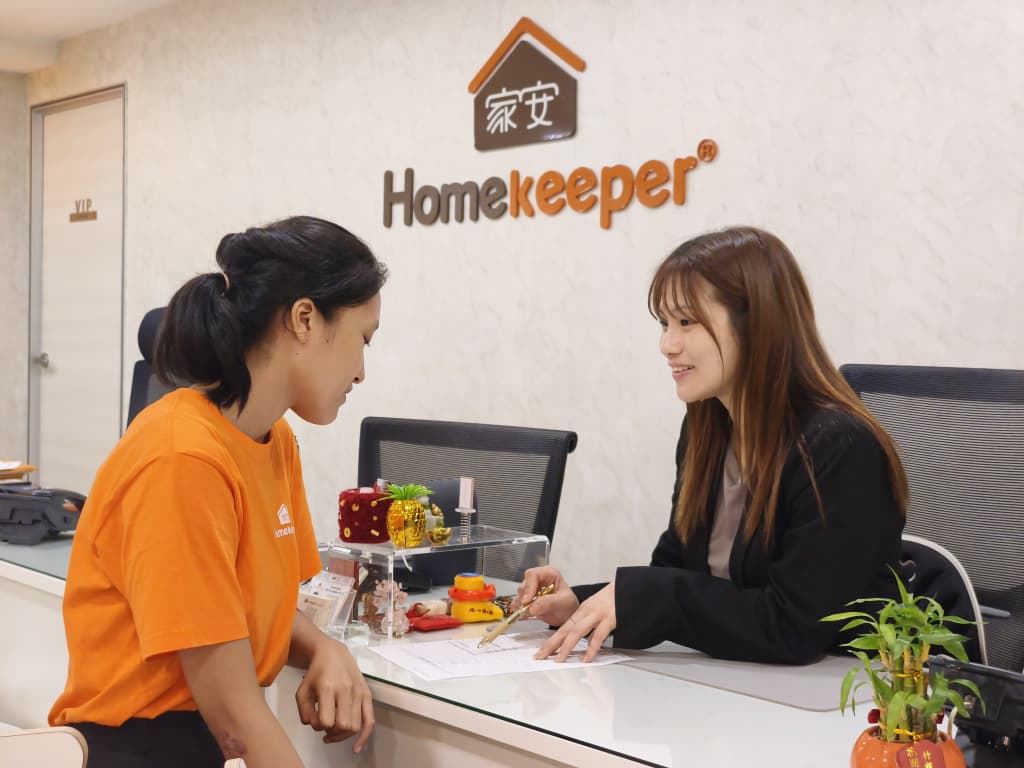
A domestic helper does not need perfect English or polished interview skills. She does need to understand essential instructions and communicate clearly enough for the responsibilities in your home.
This is important for food allergies, medication reminders, infant routines, emergency instructions, and updates about an elderly family member. Language compatibility may also matter if someone at home mainly communicates in Mandarin or a dialect.
Give a short instruction, then ask the candidate to explain it in her own words. Focus on understanding, patience, and willingness to clarify rather than accent or grammar.
7. She Appears Uncomfortable With the Actual Job Scope
A capable helper may still be unsuitable for a particular household. This is often a compatibility issue rather than a character problem.
Share the real conditions of the role, including the size of your home, number of family members, pets, priority duties, and any specialised care needs. Do not present the role as mainly housekeeping if it also involves demanding childcare or elderly care.
If she is uncomfortable with an essential duty, it is better to recognise the mismatch before confirming the placement.
8. She Cannot Discuss Mistakes or Feedback Constructively
Everyone makes mistakes, especially while adapting to a new household. What matters is how the person responds.
Ask the candidate to describe a mistake she made, what she did afterwards, and what she learned. Look for honesty, responsibility, and willingness to improve.
One nervous answer should not decide the interview. The stronger warning sign is a repeated pattern of hiding mistakes, refusing reasonable feedback, or blaming every previous difficulty entirely on others.
9. The Maid Agency Discourages Verification or Pressures You to Pay
A reliable maid agency should help you make an informed decision. Be careful if an agency refuses to provide sufficient candidate information, avoids arranging an interview where possible, gives unclear answers about screening, or pressures you to confirm and pay immediately.
Use MOM’s Employment Agency Directory to check whether an agency is licensed, review available service quality and performance information, and identify agencies that are under regulatory action.
You should also know who your point of contact is and what support will be available before and after deployment.
10. Fees, Services, and Replacement Terms Are Unclear

Do not make payment until you understand what is included in the agency package.
Request a written breakdown of the agency fee, administrative charges, insurance, medical examination, travel arrangements, training, and other costs. Read the service agreement carefully and clarify the replacement period, possible additional charges, refund conditions, and what happens if the selected candidate cannot be deployed.
Important terms should be clearly stated in writing before you confirm the arrangement.
What Should Not Be Treated as a Red Flag?
Nervousness, cultural differences, and the pressure of an interview can affect how someone communicates. The following are not automatic red flags:
- She is quiet or nervous during the first interview.
- She does not maintain prolonged eye contact.
- She takes time to understand a question before answering.
- She honestly admits that she needs training in a particular task.
- She asks about salary, rest days, phone use, meals, accommodation, or the household schedule.
- She has one short employment with a clear and consistent explanation.
- Her English is not fluent, but she understands essential instructions and can communicate important information.
A fair assessment should focus on verified experience, judgement, communication, willingness to learn, and household compatibility. Assumptions based on accent, personality, nationality, or body language may cause you to overlook a suitable candidate.
What Should You Do After Noticing a Red Flag?
Use this simple process:
- Pause. Do not form a conclusion based on one answer or first impression.
- Probe. Ask an open question and request a specific example.
- Verify. Compare the answer with the biodata, employment record, and information provided by the agency.
- Compare. Decide whether the issue affects an essential responsibility in your household.
- Confirm. Make sure both sides understand the job scope, employment terms, and areas where training may be required.
The best candidate is not always the person who gives the smoothest interview. A stronger match is someone whose experience can be explained, whose expectations are realistic, and whose communication style works with your family.
Conclusion
Red flags are useful when they encourage employers to ask better questions. They become unhelpful when they lead to quick assumptions or unfair conclusions about a candidate.
A successful placement begins with clear household requirements, an honest interview, proper verification, and realistic expectations from both sides. Look beyond polished answers and consider whether the candidate’s experience, communication style, safety awareness, and expectations genuinely match your family’s needs.
Once your domestic helper begins working in your home, patience, clear instructions, and mutual respect will remain just as important as the initial selection. Read our guide on building a good relationship with your domestic helper for practical advice on creating a positive working relationship.
Need Help Selecting the Right Domestic Helper in Singapore?

Established in 1998, Homekeeper has helped more than 80,000 families find suitable domestic helpers. With over 300 candidate profiles, comprehensive background checks, and training support through local and overseas training centres, we make the selection process easier and more reassuring for employers.
From shortlisting and interviews to Work Permit applications, documentation, transfers, and repatriation arrangements, Homekeeper can support you throughout the hiring process. We also provide counselling and additional training after deployment when needed.
Contact Homekeeper for help finding a domestic helper who suits your household needs.
Frequently Asked Questions
1. What Are the Biggest Red Flags When Hiring a Domestic Helper?
The biggest red flags include inconsistent information, vague experience claims, automatic agreement to every duty, unsafe answers to practical situations, and unclear agency fees or terms. Investigate each concern before making a final decision.
2. Are Several Transfers Always a Red Flag?
No. Multiple transfers may happen for reasons unrelated to the helper’s performance. Ask for a clear explanation, review the employment timeline, and look for consistency rather than judging the number of transfers alone.
3. How Can I Verify a Domestic Helper’s Employment History?
If you are still selecting a helper, ask the employment agency to help verify her previous employment history. Once you have a helper, you may also be able to check the relevant employment information through MOM’s FDW eService.
4. What Questions Should I Ask During a Domestic Helper Interview?
Ask her to describe her previous daily routine, explain how she handled duties similar to yours, respond to practical safety situations, and identify tasks where she may need training. Open questions reveal more than questions that only require yes or no answers.
5. Is Nervousness During the Interview a Red Flag?
No. Nervousness is common, especially during an overseas video interview or first meeting. Focus on whether her information remains consistent and whether communication improves as she becomes more comfortable.
6. Is It a Red Flag if a Helper Asks About Rest Days or Phone Use?
No. These are reasonable matters to clarify before employment begins. Discussing expectations early helps both sides decide whether the arrangement is suitable.
7. How Do I Check Whether a Maid Agency Is Licensed in Singapore?
Search for the agency in MOM’s Employment Agency Directory. It provides licensing, service quality, performance, and regulatory information that can help employers compare agencies.
8. Should I Trust My Instinct When Selecting a Domestic Helper?
Your instinct can tell you when to pause, but it should not replace verification. Base your final decision on consistent information, relevant experience, safety awareness, communication, and compatibility with your household.
About the Author
Linda Seh has over 20 years of experience in the Employment industry. She takes the time to thoroughly interview each family and helper to understand their requirements, personalities, and preferences. Her intuition and insight has helped her make placements that result in lasting, harmonious working relationships. Linda now leverages this expertise and experience to simplify your search and ensure you find the ideal and qualified helper to become a valued member of your family.