

When a family member becomes bedridden, even simple daily routines can become much harder. Bathing may have to be done in bed. Changing clothes or diapers may require lifting and turning. Meals may need more supervision, and someone may need to be nearby for much of the day.
For many families, the hardest part is knowing what to focus on and whether they are doing enough to keep their loved one safe, comfortable and properly cared for.
This guide covers the most important parts of bedridden care at home, from skin care and feeding to safe movement and knowing when additional caregiving support may be helpful.
1. Understand How Much Help Your Loved One Needs
Not every bedridden person needs the same level of assistance. Some may still be able to sit up, feed themselves or communicate clearly, while others may rely on another person for almost every part of the day.
Start by considering whether your loved one can:
- turn from side to side independently
- sit up without support
- eat and drink without assistance
- transfer between the bed and wheelchair
- communicate pain or discomfort
- manage toileting
- remember medication and daily routines
This gives the family a clearer picture of how hands-on the care will be and whether one person can realistically manage it alone.
2. Protect the Skin and Reduce the Risk of Bedsores

Someone who spends long periods in bed can be more vulnerable to pressure injuries, commonly known as bedsores.
Areas such as the heels, hips, tailbone and elbows are especially prone to pressure because they remain in contact with the bed for long periods.
Regular repositioning is therefore important. When helping your loved one change position:
- avoid dragging them across the bed
- use suitable pillows or positioning supports where appropriate
- keep bedsheets smooth and dry
- check the skin regularly
- follow any specific positioning advice given by healthcare professionals
What Should You Look for?
Pay attention to persistent redness or discolouration, swelling, unusual warmth, blisters, broken skin or complaints of pain around pressure areas.
If the skin has already broken down or appears to be getting worse, seek professional advice rather than trying to manage a serious wound on your own.
3. Keep Personal Hygiene Simple and Consistent
For someone who cannot get out of bed, personal hygiene may need to be managed completely by another person. The daily routine may include:
- bed bathing
- changing clothes
- oral care
- cleaning after toileting
- changing diapers
- keeping skin folds clean and dry
Prepare everything before starting so that the person does not have to be left unattended midway.
If diapers are used, check them regularly and change them when wet or soiled. Prolonged moisture can irritate the skin and make it more vulnerable to breakdown.
Most importantly, maintain the person’s privacy where possible. Being dependent on someone else for bathing and toileting can feel uncomfortable, so a calm and respectful approach matters.
4. Pay Attention to Meals, Fluids and Swallowing

A bedridden person may eat less because of poor appetite, fatigue or difficulty feeding themselves.
Try to maintain regular meals and fluids according to any instructions from their doctor or dietitian. Good nutrition also helps support skin and muscle health.
If the person needs feeding assistance, allow enough time rather than rushing the meal.
Watch for Swallowing Difficulties
Repeated coughing or choking while eating or drinking should not be ignored. Other warning signs may include:
- difficulty swallowing
- food appearing to get stuck
- a wet or gurgly voice after meals
- shortness of breath while eating
These may indicate a swallowing problem that should be assessed professionally.
5. Move and Transfer Them Safely
Turning someone in bed, changing a diaper or transferring them into a wheelchair can be physically demanding.
Trying to lift a person incorrectly can injure both the person receiving care and the caregiver.
Where possible:
- learn proper handling techniques
- avoid pulling the person by their arms
- use transfer equipment if recommended
- make enough space around the bed
- do not attempt a transfer alone if you cannot do it safely
What If They Are Too Heavy for Me to Move?
Do not repeatedly force yourself to lift or transfer someone beyond what you can safely manage.
Depending on the situation, your family may need another person to assist, suitable transfer equipment, or additional caregiving support.
This becomes especially important if repositioning and transfers need to happen several times a day.
6. Set Up the Home to Make Daily Care Easier
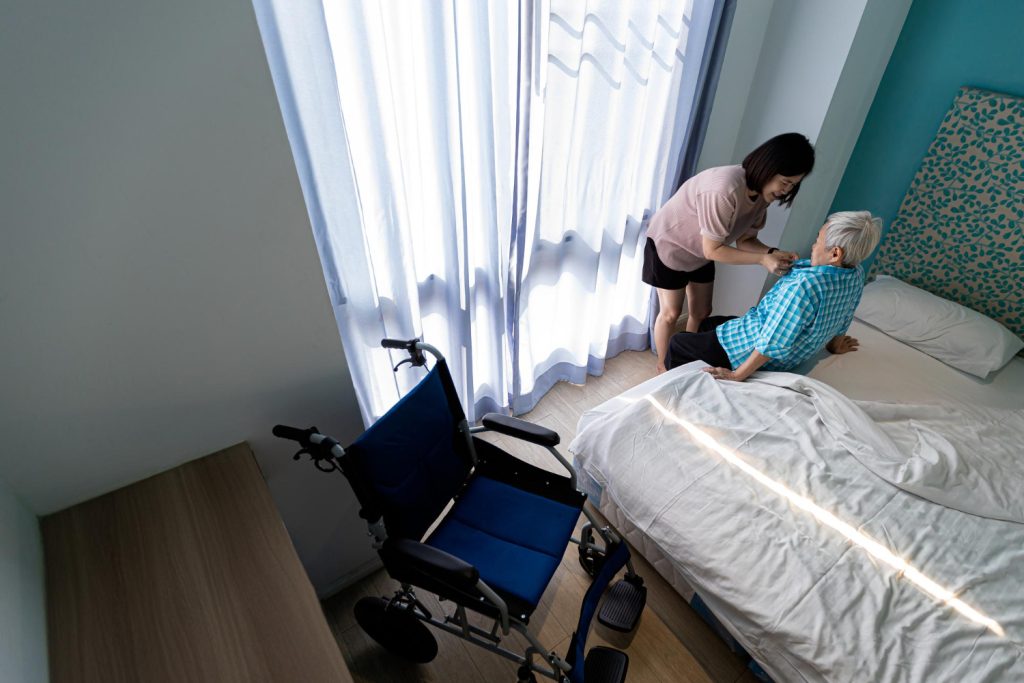
A few practical changes can make bedridden care much more manageable. Depending on the person’s needs, consider:
- a suitable or adjustable bed
- positioning pillows
- pressure-relieving mattress if recommended
- waterproof mattress protection
- disposable underpads
- wheelchair or commode
- transfer aids
- an over-bed table
- a simple way for the person to call for help
Keep frequently used items organised and make sure there is enough space for the caregiver to move safely around the bed.
7. Follow a Simple Daily Care Routine
When several things need to be done each day, a routine helps prevent important tasks from being overlooked. A simple example may look like this:
Morning
- toileting or diaper check
- washing and changing
- skin check
- breakfast
- medication reminders
- repositioning
During the Day
- meals and fluids
- regular repositioning
- toileting
- appropriate movement
- conversation and companionship
Evening
- hygiene and toileting
- skin check
- medication reminders
- clean and dry bedding
- comfortable positioning for rest
The exact routine should always be adjusted to the person’s health condition and care instructions.
If several family members or a helper are involved, writing the routine down can help everyone provide more consistent care.
8. Keep the Person Connected With Everyday Life
Bedridden care should not become only about bathing, feeding, changing and medication.
Where possible, continue including the person in normal family life. This could be as simple as:
- having regular conversations
- playing favourite music
- watching familiar programmes
- arranging family visits
- reading together
- letting them choose meals or clothing
Someone may have lost much of their independence, but they should still be treated with dignity and given choices where possible.
9. Know When You Need Medical Help

Family members and caregivers often notice small changes before anyone else because they see the person every day.
Seek medical advice if you notice:
- new or worsening pressure injuries
- fever
- unusual drowsiness
- sudden confusion
- breathing difficulties
- repeated choking
- significant changes in eating or drinking
- severe or worsening pain
- sudden deterioration in overall condition
A domestic helper can support everyday care, but more complex medical needs such as wound treatment, injections, tube feeding or other clinical procedures may require appropriate healthcare professionals.
Can You Manage Bedridden Care Alone?
Long-term bedridden care can become a major responsibility, especially if one family member is handling most of the work.
Additional support may be worth considering when:
- your loved one needs help throughout most of the day
- lifting or repositioning is becoming physically difficult
- someone needs to be present while family members are working
- your sleep or work is regularly affected
- you are worried about leaving the person alone
- the daily routine is becoming difficult to maintain consistently
Getting additional help does not mean that the family is stepping away from caregiving. It can make the arrangement more manageable and give family members more time to focus on their relationship with their loved one.
Can a Domestic Helper Help With Bedridden Care?

A suitable domestic helper can provide valuable support with many of the daily routines involved in bedridden care.
Depending on her training and experience, this may include:
- bathing and personal hygiene
- feeding
- changing clothes and diapers
- toileting
- repositioning
- mobility assistance
- companionship
- medication reminders
- following an established care routine
When hiring for this type of role, it is important to look beyond general housekeeping experience.
Consider whether the helper is comfortable with hands-on care, can follow routines carefully, communicates patiently and has the physical ability to provide the level of support required.
For families caring for elderly loved ones, Homekeeper also provides elderly care-trained helpers. Their training covers practical areas including bathing, feeding, effective communication, infection control, movement and mobility, fall prevention and emergency handling.
When Could a Male Caregiver Be Helpful?
For some households, a male caregiver may be worth considering when the bedridden person requires more physically demanding assistance.
This may be particularly relevant when:
- frequent repositioning is required
- the person needs substantial transfer assistance
- the person is larger or heavier
- a male care recipient prefers a male caregiver for personal care
Physical ability is only one consideration. Proper handling skills, patience, attentiveness and compatibility with the person receiving care are equally important.
Male caregivers remain less common in Singapore, so families who specifically require one may want to start the search earlier. If you are considering this option, read our guide Male Caregiver Singapore: 6 Benefits for Elderly Care at Home to understand when a male caregiver may be suitable and what to consider before hiring one.
Final Thoughts
Caring for a bedridden loved one at home can be demanding, but a clear routine can make the day more manageable.
Focus first on the essentials: keeping the person clean and comfortable, protecting the skin, providing meals and fluids, helping them move safely and paying attention to changes in their condition.
Just as importantly, recognise when the physical or time commitment has become too much for one family member to manage alone.
Need Help Finding the Right Caregiver?

If your loved one needs regular help with bathing, feeding, toileting, repositioning, mobility or daily supervision, having the right caregiver can make a meaningful difference at home.
Homekeeper can help families identify a domestic helper whose experience, training and abilities better match the household’s caregiving needs. For situations requiring more physically demanding support, families can also discuss whether a male caregiver may be suitable.
Speak with Homekeeper about your loved one’s daily care needs so the team can recommend suitable candidates for your family.
Frequently Asked Questions
- How often should a bedridden person be repositioned?
A bedridden person should be repositioned regularly to reduce prolonged pressure on the same areas of the body. The exact schedule may depend on the person’s condition and care plan, so follow any specific advice given by healthcare professionals.
- What are the early signs of bedsores?
Look out for persistent redness or discolouration, swelling, unusual warmth, blisters, broken skin or pain around pressure areas such as the heels, hips, tailbone and elbows.
- How do you keep a bedridden person clean?
Daily care may include bed bathing, changing clothes, oral care, cleaning after toileting, changing diapers, and keeping skin folds clean and dry. Prepare everything before starting and maintain the person’s privacy as much as possible.
- What should I do if a bedridden person coughs or chokes while eating?
Repeated coughing, choking, difficulty swallowing, food appearing to get stuck, a wet or gurgly voice after meals, or shortness of breath while eating should be taken seriously. These may indicate a swallowing problem that needs professional assessment.
- What if I cannot safely lift or reposition my loved one?
Do not force yourself to lift or transfer someone beyond what you can safely manage. Your family may need another person to assist, suitable transfer equipment, professional guidance, or additional caregiving support.
- Can a domestic helper take care of a bedridden person?
A suitable domestic helper can support many daily routines such as bathing, feeding, changing clothes and diapers, toileting, repositioning, mobility assistance, companionship and medication reminders, depending on her training and experience. More complex medical procedures should still be handled by appropriate healthcare professionals.
- When should a family consider getting additional caregiving help?
Additional help may be useful when the person needs support throughout most of the day, lifting or repositioning becomes physically difficult, someone needs to be present while family members are working, or caregiving is regularly affecting sleep, work and daily life.
- Is a male caregiver suitable for bedridden care?
A male caregiver may be worth considering when frequent repositioning, substantial transfer assistance or more physically demanding care is required. However, proper handling skills, patience, attentiveness and compatibility remain just as important as physical ability.
